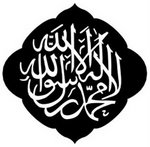
Qadiani Mal'oon
This article draws special attention of the reader to the fact that the Qadianis deem Mirza Ghulam Ahmad as a Prophet incarnate through reincarnation, i.e. rebirth of the holy Prophet of Islam in Mirza Ghulam Ahmad's person. Thus they have rebelled against Islam and seceded from it. They have infective the pretender a place higher than that of the holy Prophet (SAW).
The contents of this text are based on authentic Qadiani literature with references to the relevant book and page. We take full responsibility and do hereby declare that the sources are authentic and correct.
The below-cited incontrovertible proofs indicate beyond the slightest doubt that Qadianism is an entirely different religion Qadiani Mal'oonfrom Islam. The reality of the Qadiani religion is that if you accept the Qadiani Mirza as Prophet then it is all right, otherwise the Religion of Islam is abused as being dead, cursed, satanic and contemptible, and the Prophet hood and Apostleship of Muhammad (SAW) too is denied. May not Almighty Allah deprive anyone of Wisdom and Faith!
To Qadianis Muhammad (SAW) is Mirza Ghulam Ahmad Himself
Mirza Ghulam Ahmad claims that he himself is (na-auzoo-billah) Muhammad (SAW):
Muhammad is the apostle of Allah. and those who are with him are strong against Unbelievers, (but) compassionate amongst each other. (HQ 48.29)
Mirza said, "In this divine revelation (the above verse) I have been named Muhammad as well as the Messenger of Allah". (Ek Ghalti Ka Izala, p.3;Roohani Khazain vol.18, p.207).
The So-Called Two Prophetic Appointments Of Muhammad (SAW)
The reasons why the Qadianis deem Mirza to be Muhammad (SAW) is that according to the Qadiani belief, `Khatam un Nabieen' (the final Prophet (SAW)) had been ordained to be born in Mecca as Muhammad. For the second time, according to the Qadianis, he was reincarnated in Qadian as Mirza Ghulam Ahmad ! In other words, the sprit of Muhammad (SAW) along with his prophetic accomplishments allegedly appeared a second time in the incarnation of Mirza. And we quote:
"And know that just as our holy Prophet (SAW) was born in the 5th century, in the same way he was reborn in the end of 19th century in the incarnation of the Promised Masih" (Mirza). (khutbah-e-Ilhamiah,p.180; Roohani Khazain, vol.16,p270)
"The holy Prophet (SAW) had two births as a Prophet. In other words, we may say that it was promised that the holy Prophet (SAW) would be born in the world once and once more reincarnated and this was fulfilled by the incarnation of the promised Masih and the promised Mahdi" (Mirza). (Tuhfa-e-Golravia, p94; footnote, Roohani Khazian, vol.17,p.249)
Mirza of Qadian Claimed To Be The Same As Muhammad (SAW)
According to Qadiani belief Muhammad (SAW) with all his excellence was reincarnated in Mirza of Qadian. As such the entity of Mirza of Qadian is (na-uzoo-billah)the same as the entity of Muhammad (SAW). Mirza has said:
"And Allah bestowed upon me the bounty of the holy Prophet and made it perfect, and he drew towards me the kindness and generosity of that merciful Prophet, so much so that my entity became his entity. Thus he who joins my Jamaat really becomes one of the Sahaba of my chief who was better then all the Prophets. It is not hidden from those with the ability to think that this is what the words "others of them" mean. The person who makes a difference between me and Mustafa has neither seen me nor recognized me". (Khutbah-e-Ilhamiah, p.171; Roohani Khazain, vol.16, pp.258-259).
Mirza of Qadian Claimed That He Possessed All The Virtues And Excellence Of Muhammad (SAW)
Once the belief had been fabricated that the being of Mirza is exactly the being of Muhammad (SAW) and that it is Muhammad (SAW) himself who was reincarnated in Qadian as Mirza, then it must also be alleged that all the accomplishments and distinctions of Muhammad (SAW) were transferred to Mirza. Mirza has said:
"When I am the holy Prophet incarnate and when all the accomplishments of Muhammad including the prophet hood are reflected in my mirror of my shadiness, then who is the man who has claimed prophet hood in a separate being ?" (Ek Ghalti Ka Izala, p.8; Roohani Khazain, vol.18,p.212)
"The entity of the promised Masih (Mirza), in the sight of Allah is the entity of the holy Prophet (SAW). In other words, in the records of Allah there is no duality or difference between the promised Masih and the holy Prophet (SAW). Rather they both share the same eminence, the same rank, the same status and the same name. Although verbally they are two, yet in reality they are one and the same". (Al-Fazl, Qadian, Vol.3, No.37, dated 16th September 1915, as cited in Qadiani Mazhab page 207, 9th edition, Lahore)
Mirza Of Qadian Claimed That He Was The Final Prophet
According to the Qadiani belief, the "Qadiani based" birth of Muhammad (SAW) as a prophet took place in the incarnate AUTAR, Mirza of Qadian. And as he became incarnate of Muhammad (SAW) then Mirza becomes the "final prophet" too ! Mirza says:
I have told so many times that according to the verse: "And others of them.." I am incarnate the last of the Prophets. Twenty years ago Allah named me in Braheen-e-Ahamadia, Muhammad and AHmad and declared that I am the holy Prophets (SAW) incarnation. (Ek Ghalti Ka Izala, p.8; Roohani Khazain vol.18; p212)
"Blessed is he who has recognized me. Of all the paths to God I am the last path, and of all his Lights, I am the last Light. Unfortunate is he who forsakes me, because without me all is darkness". (Kashti-e-Nooh, p.56; Roohani Khazain, vol.19, p.61).
Mirza of Qadian Claimed He Was The Best Of The Prophets Of Allah
"Many thrones have descended from heaven but thy throne has been placed the highest". (Tazkirah 2nd Ed, p.643)
"The various accomplishments which were bestowed upon all other Prophets were concentrated in a greater degree in the holy Prophet. All those accomplishments have been conferred on me through the holy Prophets reincarnation in me. That is why I bear the names of Adam, Abraham, Moses, Noah, Solomon, Jesus, etc. All the previous Prophets were the incarnations of special attributes of the holy Prophet but I am the the reincarnation of all the attributes of the holy Prophet". (Malfoozat-e-Mirza, Vol.3, P.270)
Mirza of Qadian Claimed That He Was Superior To Muhammad (SAW)
The Qadianis believe that Mirzas reincarnation was superior to the Prophets first birth in Mecca . Mirza says:
One who denies that the orainment of the Prophet (SAW) is related to the 6th thousand as it was related to the 5th thousand, denies the truth and the mandate of the Quran. the truth is that the spirituality of the (reincarnated) holy Prophet at the end of the 6th thousand (i.e. these days), is much more stronger, more complete and severe than in those early years. rather it is like the 14th (moonlit) night". (Khutbah-e-Ilahmiah, p181; Roohani Khazain, vol.16, pp.271-272)
The Simile Of "The New Moon" Used For The Holy Prophet (SAW) And That Of "The Full Moon" Used For Mirza
The superiority of the Qadiani incarnation has been expressed in yet another style: viz. During the Meccan age the holy Prophet (SAW), Islam was like the Crescent in which there is no light but in his so-called Qadiani reincarnation, Islam became lighted and illuminated like the full moon. Mirza said:
"And Islam started like the cescent which was destined ultimately to become in the later ages the full moon by the command of God. Thus Allahs wisdom willed that Islam should asume the form of the full moon in that century which should resemble the full moon by way of counting". (Khutbah-e-Ilahmiah, p181; Roohani Khazain, vol.16, p.275)
"To declare those who denied the holy Prophet in his first birth as unbelievers and outside the fold of Islam, but to regard the deniers of his second birth as Muslim is an insult to the Prophet and a joke against the signs of Allah, although the promised Masih has in Khutbah-e-Ilahmiah, compared the mutual relation between the first and the second births of the holy Prophet to the relationship between the crescent and the full moon". (Akhbar Al-Fazl, Qadian, Vol.3, No.10, dated 15th July 1915 as cited in Qadiani Mazhab p262)
Greater Manifest Victory
In order to express the superiority of Mirza it was claimed that the manifest victory achieved by Mirza was greater then the manifest victory of the holy Prophet (SAW). Thus Mirza said
"It is apparent that the time of the manifest victory of the era of the holy Prophet has expired, and the second victory which was to be much greater and clearer then the first one had yet to be achieved. It was ordained that its time should fall during the times of the promised Masih". (Khutbah-e-Ilahmiah, pp193-194(Khutbah-e-Ilahmiah; Roohani Khazain, vol.16, p.288)
SO-CALLED BEGINNING AND PERFECTION OF MIRZA'S SPIRITUAL EXCELLENCE
It was also claimed that the era of the Makki birth of the holy Prophet (SAW) was only the first step in his progress of spiritual attainments, whereas his Qadiani reincarnation represents the highest pinnacle of his spiritual development. Thus it is said:
"The spirituality of our holy Prophet (SAW) was conceived 5th thousand (i.e. Makki birth) with its precise attributes and that period was not the the climax of his spirituality's development. It was rather the first step to the highest pinnacle of its perfection. Thereafter this spirituality manifested itself in its full glamour during the 6th thousand [his rebirth in Qadian] at the present time". (Khutba-e-llhamiah, p177; Roohani Khazain, Vol.16, p.266)
THE SO CALLED SUPERIOR MENTAL DEVELOPMENT OF MIRZA
It is also claimed that the mental development of Mirza of Qadian was superior to that of the holy Prophet (SAW). Thus it is said:
"The mental development of the promised Masih (i.e. the Mirza of Qadian) was higher than that of the holy Prophet (SAW). And this is only a part of the superiority which the promised Masih has over the holy Prophet. The mental faculties of the holy Prophet could not manifest fully owing to the deficiency of civilization; although the ability existed. They have now manifested themselves fully through the promised Masih by virtue of the advancement of civilization." (Review, May 1929, as cited in Qadiani Mazhab, p.266, ninth edition. Lahore )
QADIANIS TERM REClTERS OF KALIMAH OF MUHAMMAD (SAW) AS KAFIR(!)
When it is admitted, according to the Qadiani belief, that the Qadiani Mirza is (God forbid) superior to Muhammad of Arabia (SAW) in dignity then it must also be necessary to believe that those who recite the Kalimah of Muhammad (SAW) are not Muslims. In other words. the Kalimae Tayyibah, (La Illaha Ill-lah, Muhammadur Rasoolullah), without belief in the Qadiani Mirza becomes false. Thus it is said:
"The point is now quite clear. If it is 'Kufr' to deny the gracious Prophet it must also be 'Kufr' to deny the promised Masih, because the promised Masih is in no way a separate being from the gracious Prophet; rather he is the same (Muhammad incarnate). If anyone is not deemed a Kaflr for denying the promised Masih, then anyone else who denies the gracious Prophet also cannot be considered a Kafir. How is it possible that denying him in his first birth as Prophet should be regarded as Kufr, but denying him in his (reincarnated) second birth as prophet should not be regarded as Kufr, when, as claimed by the promised Masih, his (Mirza's as Muhammad incarnate) spiritual attainment is stronger, complete and severe." (Kalimatul Fasl, pages 146-147, as cited in the Review of Religions, dated March-April 1915).
"Any person who believes in Moses but does not believe in Christ, or believes in Christ but does not believe in Muhammad, or believes in Muhammad but does not believe in the promised Masih, is not only a Kafir, but a 'pakka' (confirmed) Kafir, and (he is) out of the fold of Islam." (Kalimatul Fasl, page 110, by Mirza Bashir Ahmad, M.A.)
"The Ahmadi movement bears the same relationship to Islam as Christianity bears to Judaism." (Muhammad Ali Lahori Qadiani cited from Mubahasah Rawalpindi, page 240).
"All such Muslims as did not swear allegiance to the promised Masih (Mirza Ghulam Ahmad of Qadian), even though they did not hear the name of the promised Masih, are Kafir and debarred from the fold of Islam." (Aiena-e-Sadaqat, page 35, by Mirza Mahmud Ahmad Qadiani).
"It is incumbent upon us that we should not regard non-Ahmadis as Muslims, nor should we offer prayers behind them, because according to our belief they deny one of the prophets of Allah. This is a matter of faith None has any discretion in this." (Anwar-e-Khilafat, page 90, by Mahmud Ahmad Qadiani).
THE SO-CALLED QADIANI KALIMAH
It also became necessary in the Qadiani strategy to include the Qadiani Mirza in the meaning of the Qadiani Kalimah: Thus it is said:
"As a result of the birth of the promised Masih (the Qadiani Mirza) a difference has cropped up (in the meaning of the Kalimah). Before the birth of the promised Masih (the Qadiani Mirza) in the world as a prophet, the words Muhammad ur Rasul Allah) included in their meaning only such prophets as had preceded him; but after the incarnation of the promised Masih (the Qadiani Mirza) in the world as a prophet, one more prophet has been added to the meaning of Muhammad ur Rasul Allah. Therefore on account of the incarnation of the promised Masih the Kalimah, God forbid, does not become abolished; it rather shines more brightly. In short, the same Kalimah is (effective) even now for embracing Islam, with the only difference that the incarnation of the promised Masih (Mirza Qadiani) has added one more prophet to the meaning of Muhammad ur Rasul Allah". (Kalimatul Fasl, page 158, by Mirza Bashir Ahmad Qadiani).
In short, the Qadiani Religion has retained the same words of the Kalimah but the Qadiani belief has changed the meaning of the Kalimah. In the Kalimah of the Muslims Muhammad ur Rasul Allah means Muhammad of Arabia (SAW) but in the Qadiani Kalimah Muhammad ur Rasul Allah means Mirza Qadiani as Muhammad incarnate, reborn in the world as a prophet for the second time. Thus it is said:
"Moreover, even if we accept by supposing the impossible that the sacred name of the gracious Prophet has been included in the sacred Kalimah because he is the last of the Prophets, even then there is no harm and we do not need a new Kalimah because the promised Masih is not a separate entity from the gracious Prophet as he (Mirza) himself says: "My being is exactly the being of Muhammad ur Rasul Allah". Also, "One who discriminates between me and Mustafa has neither recognized me nor seen me". And the reason for this is Allah Almighty's promise that He would reincarnate "Khatam un Nabieen" in this world once more as a prophet as is evident from the verse "And others of them... Thus the promised Masih (Mirza of Qadian) is himself Muhammad ur Rasulullah, who has been incarnated in the world again to spread Islam. We do not, therefore, need any new Kalimah. Albeit, a new Kalimah would have been necessary, if some other person had been reincarnated instead of Muhammad ur Rasul Allah. So contemplate!" (Kalimatul Fasl, page 158).
QADIANI BELIEF: PROPHET HOOD OF MUHAMMAD STANDS ABROGATED AND HIS KALIMAH STANDS CANCELLED
A little thought on the above-cited passages makes it quite clear that not only do the Qadianis consider Mirza Ghulam Ahmad to be a Prophet and Messenger (of Allah) but they also consider Mirza of Qadian a complete incarnation of Muhammad (SAW) and as such recite his (Mirza's) Kalimah. They consider as Kafirs all those who recite the Kalimah of Muhammad of Arabia (SAW). This proves that for the Qadianis the Kalimah of Muhammad of Arabia (SAW) stands cancelled.
If we look more closely into the issue we shall find that according to the Qadiani belief-like that of the Bahais - the period of the Prophet hood and Apostleship of Muhammad of Arabia (SAW) has expired and it stands repealed for all practical purposes, because according to the Qadiani belief the basis of salvation lies in obeying the Qadiani Mirza only. So Mirza said:
"Say to them: if you love God then come and obey me so that God also may love you".
(Mirza Qadiani's "revelation as cited in Haqiqatul Wahi, Page 79/82, Lahore , 1952; Roohani Khazain. Vol. 22, p. 82. Also see pages 46, 62, 81, 182, 205, 277, 360, 363, 378, 395, 495, 630, 634, in Tazkirah, 2nd Edition).
"In Braheen-e-Ahmadia, God has called me by the name of Ibrahim, as He said: "This means: Salutation on Ibrahim (i.e. this humble man [Mirza]). We truly made friends with him and saved him from every sorrow. And O ye who follow, let the place of Ibrahim's footsteps be the place of your prayers. That is, obey completely so that you may attain salvation." (Arbaeen, Vol. 3, pp. 30-31; Roohani Khazain, Vol. 17, p. 420).
"As regards the assertion (verse from Quran regarding Ibraham) this is a verse of the holy Quran. Here it means: Perform your prayers and hold beliefs on the pattern of Ibrahim (i.e. Mirza Qadiani) who has been sent, and mould yourself on his model in every matter". (Arbaeen, Vol. 3, p. 31; Roohani Khazain, Vol. 17, p.42).
"Similar is the verse (same verse quoted above) which contains a hint that at a time when the Ummat-e-Muhammadia will become divided into many sects, then during the last era an Ibrahim (i.e. Mirza Qadiani) will be born and out of all the sects, the sect which follows this Ibrahim, (i.e. Mirza!), will be saved". (Arbaeen, Vol. 3, page 32; Roohani Khazain, Vol. 17, p. 4213.
"My teachings contain orders as well as prohibitions and renovation of important injunctions of the Shari'at. For this reason God has named my teachings and the 'wahi' (revelation) that comes to me as a 'boat. Thus see, God has declared my 'wahi', my teachings and allegiance with me to be Noah's Ark and the basis of salvation for all human beings. Let he who has eyes may see and he who has ears may hear." (Arbaeen, Vol. 4, footnote of page 6; Roohani Khazain, Vol. 17, p. 435).
Thus obedience to Mirza Qadiani's prophet hood, teachings, 'wahi' and his renovated Shari'at is allegedly the only basis for salvation for all mankind. This only means, that the Shari'at of Muhammad of Arabia (SAW), his teachings and 'wahi" are no longer the basis of salvation. In other words, Mirza's incarnation has rendered all these useless, suspended and abolished!
THE PRE MIRZA ISLAM IS THE 'DEAD RELIGION
The above-cited quotations confirm beyond a shadow of doubt that in the opinion of the Qadianis, lslam without the Qadiani Mirza is dead. So it is said:
"Probably in the year 1906, at the proposal of Khwaja Kamaluddin, Moulvi Muhammad Ali entered into an agreement with the Editor of Akhbar-e-Watan to the effect that the Review of Religions would publish no articles about the (Qadiani) sect; it would only publish general articles on Islam and the Editor of the Watan would propagate in his paper for the assistance of the Journal, Review of Religions. The promised Masih disapproved this proposal and it was strongly opposed by the Jamaat also. Hazrat Sahib said: 'Will you present dead Islam before the world by excluding me?"
(Zikr-e-Habib by Mufti Muhammad Sadiq Qadiani page 146, First Edition, Qadian).
"We believe that a religion which does not have the chain of prophet hood (as in Islam-- Compiler) is a dead religion. We call the religions of the Jews, the Christians and the Hindus dead only because now there are no prophets in them. If this were the position in Islam too, we would be no more than mere story-tellers. Why do we regard it superior to other religions? It must have some distinction". (Malfoozat-e-Mirza, Vol. 10, page 127).
"During the lifetime of the promised Masih (Mirza Qadiani), at the proposal of Moulvi Muhammad Ali and Khwaj a Kamaluddin, the Editor of Akhbar-e-Watan started a fund-collecting scheme in 1905 for the purpose of sending copies of the Review of Religions to foreign countries, on the condition that it should not contain the name of the promised Masih (Mirza Qadiani). But 'hazrate aqdas' (Mirza Qadiani) rejected this proposal saying: Will you present dead Islam by excluding me?' Thereupon, the Editor Watan announced the closure of this fund-collecting scheme".
(Al-Fazl, Qadian, Vol. 16, No. 32, dated 19th October, 1928, as cited in Qadiani Mazhab, pages 461-462).
QADIANIS DENOUNCE ISLAM AS THE 'CURSED, SATANIC AND CONTEMIBLE RELIGION
According to the Qadiani belief, the Religion of Islam, without the prophet hood of Mirza Qadiani, is only a 'collection of tales', it is a 'cursed, satanic and contemptible religion'.
"That religion is no religion and that prophet is no prophet by following whom a man does not come so close to God as to be honored with divine conversation (i.e. Prophet hood - Compiler). That religion is cursed and contemptible which teaches that human progress depends only on a few narrated anecdotes (i.e. the Shari'at-e-Muhammadia which is narrated from the holy Prophet (SAW) - Compiler) and that the 'wahi' has lagged behind instead of going ahead ........ Hence such a religion deserves to be called satanic rather than divine." (i.e. Islam of the holy Prophet (SAW) is, God forbid, Satanic - Translator). (Zamima-e-Braheen-e-Ahmadia, Part V, pages 138-139; Roohani Khazain, Vol. 21, p. 306).
QADIANI ARROGANCE
"How absurd and false it is to believe that after the holy Prophet (SAW) the door of the divine 'wahi' has been closed for ever and there i8 no hope of it in the future till the Day of Resurrection - only worship tales. Can a religion having no direct trace of Almighty Allah be called a religion? I say, by Almighty God, that in this age there is no one more disgusted than myself with such a religion. (There is no doubt about this.- Compiler). I name such a religion as satanic religion, not divine (religion)". (Zamima-e-Braheen-e-Ahmadia, Part V, page 183; Roohani Khazain, Vol. 21, p. 354).
The above-cited incontrovertible proofs indicate beyond the slightest doubt that Qadianism is an entirely different religion from Islam. The reality of the Qadiani religion is that if you accept the Qadiani Mirza as Prophet then it is all right, otherwise the Religion of Islam is abused as being dead, cursed, satanic and contemptible, and the Prophet hood and Apostleship of Muhammad (SAW) too is denied. May not Almighty Allah deprive anyone of Wisdom and Faith!
by Maulana Muhammad Yusuf Ludhianvi
Friday, October 12, 2007

Monday, October 08, 2007

Saturday, September 15, 2007
Question 12871
Question 12871
Ibn Arabi said, "or "al-`abd-u rabb-un wa-r-rabb-u `abd-un" (the slave is the lord and the lord is the slave)."Ibn Arabi has also said, " "ar-rabb-u rabb-un fî t-tanazzul-i wa-l-`abd-u `abd-un fî t-taraqqâ" (The lord is a lord in his descent [to his creations] and a slave is a slave in rising)in Fusoos Al-Hikam" and "Al-Ahkaam. Is such aqeedah is right?IF yes then can you explain it shortly?Was he a muslim of ahle sunnat waal jamat? [Germany]
Click Play Button to listen or Download Audio Answer : 12871
Text Answer
Hazrath Mohiuddin Ibne Arabi, who authored “Fusoos-ul-Hikum” hailed from Ahle-Sunnath-wal-Jamaat. A large number of religious scholars and Ulema place him among the Ahle-Allah, the Sufiya and Aulia-Allah. Even Hazrat Mujaddid Alf-Sani (RA) includes him among the great Auliya/Saints. Among the major Aulia Allah of the Ahle-Sunnath-wal-Jamaat, a large number have great faith in him. Though he hailed from the Ahle-Sunnath-wal-Jamaat, his books particularly “Fusoos-ul-Hikam” etc., are books relating to “Ilm-e-Kashf” (Knowledge of Revelation). These persons are those who have acquired knowledge through Kashf (manifestation). In this line, others having instruments of knowledge, which are in common practice of the men in general, cannot acquire this knowledge or Ilm. Unless one has an idea of the “Ilm-e-Kashfi”, one cannot understand it. This is the reason due to which Hazrat Mohiuddin Ibne Arabi (RA), has written in the starting pages of his book “Futoohat-e-Makkiah,” that: “it is not permissible for everyone to read our book. Even it is not permissible for the Ulema to read it. Until and unless these scholars of religion have passed through Sufiya Ulema’s method of “sulook”. When he has said such a thing in respect of the Ulema, we the people, do not even come in the list of any ulemas and, in particular, whoever has put this question, he is not at all in this list. How could he ever be able to understand this subject, when doesn’t even know how to copy two sentences in Arabic. He has wrongly copied the excerpt from the book. So, how can we even expect that he will be able to understand this subject Earlier also, we had answered this question. Probably it is the same person who has got the question repeated. So that your minds need not be in confusion, I will just quote a summary of this quotation. But in future please avoid such questions. Hazrat (RA) wants to say “Allah (SWT), has revealed His names, and characteristics and attributes, based on which He has made all His creations, but these names and attributes of Allah (SWT) cannot be termed to be the Rab (Creator), in the same manner as these creations cannot be termed as Rab (Creator). For further clarification, an example is coming to my mind. “If the mirror is put before the moon, then the moon, which is seen in the mirror by being seen in the mirror, the mirror cannot be the moon, and by being seen in the mirror, the moon cannot be the mirror”. This is what he means. The meaning conveyed by Hazrat Shaikh (RA) that “Al-abdu rabbun war-rabbu abd” or “Ar-rabbu rabbun wa-in tanazzal wal abdu abdun wa-in taraq” I have also corrected the excerpt which you have copied wrongly.
Allah (Subhana Wa Ta'ala) Knows Best
Mufti Naval-ur-Rahman Miftahi
RESPONSIBILITIES OF IMAAM
RESPONSIBILITIES OF IMAAM
As the month of Ramadhaan approaches, the Huffaz will be selected to lead the people in Taraweeh Salaah. Thus you will be appointed as the Imaam to enable the people to perform the special Ibadah of Taraweeh Salaah.
According to the Ahadith the Imaam enjoys a superior status among the congregation. It is reported in a Hadith that the Imaam who performs Salaah in such a manner that the congregation is pleased with him will have a mound of musk on the day of Qiyamah (Tirmizi vol.2, pg.84).
Rasulullah (Sallallahu Alaihi Wasallam) also made dua for the hidayat (guidance) of the Imaams (Tirmizi vol.1, pg.51). This is indeed an honour – but more than that it is a tremendous responsibility.
Rasulullah (Sallallahu Alaihi Wasallam) is reported to have said: "The Imaam is responsible (for the Salaah of the muqtadies) (Haakim)." If the Imaam performs the Salaah correctly, the Salaah of the congregation will likewise be correct. If the Imaam is negligent, he will bear the burden of the deficiency that occurred in the Salaah of the entire congregation due to his negligence. Furthermore the Imaam should be an Imaam in the Musjid while leading the Salaah, as well as conduct himself as an Imaam when out of the Musjid. This applies even though you may just be an Imaam for the Taraweeh Salaah only.
Hence the Hafiz who will lead the Taraweeh Salaah should at all times possess, among others, the following qualities of an Imaam:
He must be upright and pious
He must be able to recite the Qur'an correctly
He must know the basic masaa'il of Deen pertaining to Taharah, Salaah, etc.
He must be one who knows the Sunnah and practices upon it
He must not be one who openly commits sins
He must at all times be humble
How To Make Our Tilawat More Realistic?
How To Make Our Tilawat More Realistic?
* Before tilawat, reflect and bear in mind the azmat (exalted nature) of the Qur'an Majid. Imam Ghazali rahmatullahi alayhi has quoted the statement of some elders to show the exalted position of the word of Allah Ta'ala: "Each letter of the word of Allah Ta'ala in the Lowhe Mahfuz (sacred tablet) is higher than a fabulous and magnificent mountain like the mount of Caucasus. If all the angels gather to lift up one letter, they will be unable to do so."
* Make istighfar (repentance) before tilawat.
* Renew your Imaan by saying: O Allah! This is Your word. It is haq (the absolute truth), we believe in it.
* Make du'a thus: O Allah! Grant us true ma'rifat (recognition) and tilawat of the Qur'an Majeed with ikhlas (sincerity). Mould our lives according to its teachings and grant us its blessings.
* Recite the Qur'an Majid with the tongue and make (confirm the truth) of its ahkam (laws) and subject matter with the heart. Reciting with the tongue is a physical (zahir) tilawat and confirming with the heart is a spiritual (batini) tilawat.
Sunday, September 09, 2007

Monday, September 03, 2007
Best Deeds
Once Sheikh Fuzail bin Ayaz Rahemahullah said:
Whoever gets to know about people, whom he is dealing with, with feel at ease. The best kinds of deeds are the ones done in private; and the deeds that are protected from shaitan are the ones that are not done for boasting.
Whoever gets to know about people, whom he is dealing with, with feel at ease. The best kinds of deeds are the ones done in private; and the deeds that are protected from shaitan are the ones that are not done for boasting.
Imam Shafiee
Once Imam Shafiee said the following:
There are five qualities for leadership:
(1) Saying the truth.
(2) Keeping secret private.
(3) Fulfilling the promise.
(4) Giving advice.
(5) Fulfilling the trust
There are five qualities for leadership:
(1) Saying the truth.
(2) Keeping secret private.
(3) Fulfilling the promise.
(4) Giving advice.
(5) Fulfilling the trust
Friday, August 24, 2007
Shaikhul Hadees Moulana Naeem RH
From: http://attalib.blogspot.com/2007/08/when-skys-wept-shaykh-al-tafseer.html
Unfortunately, we in the West sometimes remain aloof of the magnificent personalities who surround us and who hold together the fragile threads that bind our communities. The fact that this great scholar lived amongst us for so long in the U.S. and that people remained oblivious of his presence and stature, his merit and academic prowess, baffles the mind.
This was a man who had taught the highest level books of hadith at Darul Uloom Deoband for decades. He was named Shaykh al-Hadith by his own teacher and Ustadh of Bukhari at Darul Uloom Deoband, Mawlana Fakhrul Hasan al-Muradabadi (rh). His twelve-volume tafseer of the Qur'an, Anwar al-Qur'an, is unparalleled in the urdu language. His commentary on Tafseer al-Jalalayn, entitled al-Kamalayn, is a standard reference book for students of tafseer.
He was a close compatriot of Allamah Qari Muhammad Tayyib (rh) and a student of Shaykh al-Islam Husain Ahmad al-Madani (rh). He had a special connection and love for Allamah Shabbir Ahmad 'Uthmani (rh), who he mentioned with so much respect and awe that you would think that all of his knowledge and piety had come through him.
And yet this man lived amongst us in his old age, retired from teaching due to illness and weak health, and no one really knew who he was. When I read his books in Pakistan and became lost in his marvelous tafseer of the Qur'an, I was shocked that this was the very same Abu Jee that I knew lived in Chicago amongst us. Strange, I thought. This man is a giant. How come I have come to know of him and his scholarship only now?!
Within hours of his death, calls from around the globe were received here informing us that the announcement of Hadrat's death had already been made in Deoband, in Bihar, in Lucknow, etc... Not long after, Mufti Rafi 'Uthmani called from Karachi to send his condolences and express his grief. Apparently, they were even distantly related and Mufti Rafi has studied alongside Hadrat's son, Shaykhuna Mawlana Abdullah Saleem (db). Students of his students called in and sent their salams from all over the world.
It is sad that sometimes we don't realize a man's worth until he is separated from us. When I went to wash his body this morning, I couldn't help but notice how much peace and tranquility surrounded him. I have seen many dead bodies and performed countless janazah prayers, and almost always I have felt a strong sense of wahsha, a discomfort and unease, due to the presence of the deceased. And yet this time, even as I handled the mayyit and helped wash his lifeless body, I couldn't help but imagine that he was simply resting. Such was the state of peace that I saw in his face and in the faces of all those who washed him.
As people convened for the janazah prayers, we quickly realized that the building would not be able to handle the vast multitude of people that was flocking towards the masjid to attend the prayer. The parking lot was full, the lawn was covered with vehicles, even the streets were filled in both directions with cars.
After the janazah, a caravan of cars and pedestrians packed the street in their short march towards the graveyard. You could see a look of curious amazement in the eyes of so many non-Muslims who passed us by as they witnessed a spectacle they will probably never see again in their lives. What a scene! Hundreds of men clothed in the dress of their noble Prophet (sallallahu 'alayhi wa sallam) marched towards the graveyard, braving the heat and scorching sun, to attend the burial of the greatest savant Chicago has ever known.
They say that Allah sends signs to people at the time of the death of a wali, as if to indicate the status of that man in the eyes of Allah. It was not five minutes after Hadrat was laid to rest, as we walked out the gates of the graveyard with an emptiness in our hearts, that Allah sent us a sign of acceptance. The heavens began to weep. The skies rumbled in furious complaint. The horizon darkened in sadness. Within a minute of our exit from the graveyard, a vicious storm had unleashed itself on the people of the Earth. Those of us who walked could barely stand in the face of the fierce winds and stinging rain. Most of us were picked up by passer-by's who saved us from the storm outside.
Everybody recognized the sign. It was as if the storm had waited for Hadrat to be laid to rest in his garden before it showered it with the gift of life, before it roared its reprimanding complaint to the people that with this man you have lost more than you can ever know because of your ignorance and neglect. For too long have you disregarded this valuable gem. Now we take him back to us!
Posted by at-Talib
Thursday, July 19, 2007


Monday, July 09, 2007


Thursday, July 05, 2007
The Nisbat of the Shaikh is Attained through Self-Annihilation
The Nisbat of the Shaikh is Attained through Self-Annihilation
Hazrat Hakeem Akhtar Sahib (DB) said, “This issue is very common that if a donkey falls into a bed of salt, then it turns into salt. The reason for this is that once it falls into a bed of salt, it dies after a while, and then it becomes salt. As long as it is breathing, it remains a donkey. We come in the company and presence of the Shaikh (this means coming into contact with the shaikh by any means, i.e. through letters, emails, over the phone, and obviously physically being in their company, etc.) and we maintain our ego. If we annihilate our ego, then the way our Shaikh is, we too will become like that. All the nisbat of the shaikh will transfer into us (Insha Allah).
-Mawaahib-e-Rabbaaniyah pg. 71
Friday, June 29, 2007
ALLAMA DR. KHALID MAHMOOD SAHEB
Shariah Board of America
In cooperation with MCC, Jama Masjid & MSI
is pleased to host the programs of
A Renowned Scholar of Islam, Highly Recognized Author & Former Professor
Hazrat Allama Dr. Khalid Mahmood saheb (DB)
Founding Director of Manchester Academy
The entire Muslim community is welcome to benefit from the arrival of ALLAMA and listen to the different scholarly addresses on selective topics at the following locations
Date Time Location Address
Sat. June 30, 2007 After Maghrib MEC 8601 Menard Ave. Morton Grove, ILSun. July 1, 2007 After Zuhr Jama Masjid 6340 N. Campbell Ave, Chicago, ILSun. July 1, 2007 After Maghrib MSI 1785 Bloomingdale Road, Glendale Heights, ILMon. July 2, 2007 After Maghrib MCC 4380 N. Elston, Chicago, IL
For more information contact:
Shariah Board of America
Ph. 773-764-8274, 773-764-8501www.shariahboard.org
Sunday, May 06, 2007
The Silsilah of Mufti Shah Muzaffar Ahmed Saheb Rahemahullah
The Silsilah of Mufti Shah Muzaffar Ahmed Saheb Rahemahullah
The Muzaffaria, Hussenia,Rashidia, Quddusiyya, Chishtiyya - Sabiriyya Lineage
--------------------------------------------------------------------------------
1. Sayyid al-Mursalina Khatam an-Nabi Ahmad al-Mujtaba Muhammad al-Mustafa (Sallallahu Alihi wa Sallam)
2. Sayyidina Madinatil 'Ilmi Amir al-Mu'mineen 'Ali ibn Abi Talib (Karram allahu wajhahu)
3. Shaikh al-Mashaikh Sayyidina Khwaja Hasan al-Basri (Qaddas allahu sirahul 'aziz)
4. Shaikh al-Mashaikh Sayyidina Abdul Wahid bin Zaid (Qaddas allahu sirahul 'aziz)
5. Shaikh al-Mashaikh Sayyidina Fudayhl bin 'Ayad (Qaddas allahu sirahul 'aziz)
6. Shaikh al-Mashaikh Sayyidina Sultan Ibrahim bin Adham al-Balkhi (Qaddas allahu sirahul 'aziz)
7. Shaikh al-Mashaikh Sayyidina Huzaifah al-Marashi (Qaddas allahu sirahul 'aziz)
8. Shaikh al-Mashaikh Sayyidina Abi Hubayrah al-Basri (Qaddas allahu sirahul 'aziz)
9. Shaikh al-Mashaikh Sayyidina Mamshad 'Alw ad-Dinwari (Qaddas allahu sirahul 'aziz)
10. Shaikh al-Mashaikh Sayyidina Abi Ishaq ash-Shami (Qaddas allahu sirahul 'aziz)
11. Shaikh al-Mashaikh Sayyidina Abi Ahmad al-Abdal al-Chishti (Qaddas allahu sirahul 'aziz)
12. Shaikh al-Mashaikh Sayyidina Abi Muhammad al-Muhtaram al-Chishti (Qaddas allahu sirahul 'aziz)
13. Shaikh al-Mashaikh Sayyidina Abi Yusuf al-Chishti (Qaddas allahu sirahul 'aziz)
14. Shaikh al-Mashaikh Sayyidina Maudood al-Chishti (Qaddas allahu sirahul 'aziz)
15. Shaikh al-Mashaikh Sayyidina al-Haj Sayyid Sharif az-Zindani (Qaddas allahu sirahul 'aziz)
16. Shaikh al-Mashaikh Sayyidina Uthman al-Haruni (Qaddas allahu sirahul 'aziz)
17. Shaikh al-Mashaikh Sayyidina Markaz at-Tariqah Mu 'in uddin Hasan Mu'inuddin Chishti (Qaddas allahu sirahul 'aziz)
18. Shaikh al-Mashaikh Sayyidina Qutb uddin Bakhtiyar al-Kaki (Qaddas allahu sirahul 'aziz)
19. Shaikh al-Mashaikh Sayyidina Farid uddin Shakar Ganj al-Ujudhani (Qaddas allahu sirahul 'aziz)
20. Shaikh al-Mashaikh Sayyidina wa Sayyid al-Arifin 'Ala uddin Ali Ahmad as-Sabir (Qaddas allahu sirahul 'aziz)
21. Shaikh al-Mashaikh Sayyidina Shams uddin at-Turki al-Panipati (Qaddas allahu sirahul 'aziz)
22. Shaikh al-Mashaikh Sayyidina Jalaluddin Kabir al-Awliya al-Panipati (Qaddas allahu sirahul 'aziz)
23. Shaikh al-Mashaikh Sayyidina Ahmed Abdul Haq Radaulawi (Qaddas allahu sirahul 'aziz)
24. Shaikh al-Mashaikh Sayyidina Ahmed 'Arif ar-Radaulawi (Qaddas allahu sirahul 'aziz)
25. Shaikh al-Mashaikh Sayyidina Muhammad 'Arif ar-Radaulawi (Qaddas allahu sirahul 'aziz)
26. Shaikh al-Mashaikh Sayyidina Qutb al-'Alam al-Shaikh Abdul Quddus al-Gangohi (Qaddas allahu sirahul 'aziz)
27. Shaikh al-Mashaikh Sayyidina Jalaluddin Thanesari (Qaddas allahu sirahul 'aziz)
28. Shaikh al-Mashaikh Sayyidina Nizam uddin al-Balkhi (Qaddas allahu sirahul 'aziz)
29. Shaikh al-Mashaikh Sayyidina Abi Sa 'id al-Gangohi (Qaddas allahu sirahul 'aziz)
30. Shaikh al-Mashaikh Sayyidina Muhibbullah Ilahabadi (Qaddas allahu sirahul 'aziz)
31. Shaikh al-Mashaikh Sayyidina Shah Muhammadi (Qaddas allahu sirahul 'aziz)
32. Shaikh al-Mashaikh Sayyidina al-Shaikh Muhammad al-Makki (Qaddas allahu sirahul 'aziz)
33. Shaikh al-Mashaikh Sayyidina Adh uddin al-Amruhi (Qaddas allahu sirahul 'aziz)
34. Shaikh al-Mashaikh Sayyidina Abdul Hadi al-Amruhi (Qaddas allahu sirahul 'aziz)
35. Shaikh al-Mashaikh Sayyidina Abdul Bari al-Amruhi (Qaddas allahu sirahul 'aziz)
36. Shaikh al-Mashaikh Sayyidina Shah Abdur Rahim al-Shahid (Qaddas allahu sirahul 'aziz)
37. Shaikh al-Mashaikh Sayyidina Nur Muhammad Jhinjhanawi (Qaddas allahu sirahul 'aziz)
38. Shaikh al-Mashaikh Maulana al-Haj al-Hafiz al-Shaikh Imdadullah Muhajir Makki (Qaddas allahu sirahul 'aziz)
39. Shaikh al-Mashaikh Qutub ul Aalam Moulana Rashid Ahmed Gangohi (Qaddas allahu sirahul 'aziz)
40. Shaikh al-Mashaikh Sheikhul Islam Mujahid e Azam Moulana Syed Hussein Ahmed Madni
(Qaddas allahu sirahul 'aziz)
41. Shaikh al-Mashaikh Gouse Waqt Sheikhul Hadees Moulana Peer Khwaja Muzaffar Ahmed Burmi Makki (Qaddas allahu sirahul 'aziz)
strong>
The Silsilah of Mufti Shah Muhammad Nawal-ur-Rahman
The Silsilah of Mufti Shah Muhammad Nawal-ur-Rahman
The Maseehiya, Ashrafiya, Quddusiyya, Chishtiyya - Sabiriyya Lineage
--------------------------------------------------------------------------------
1. Sayyid al-Mursalina Khatam an-Nabi Ahmad al-Mujtaba Muhammad al-Mustafa (Sallallahu Alihi wa Sallam)
2. Sayyidina Madinatil 'Ilmi Amir al-Mu'mineen 'Ali ibn Abi Talib (Karram allahu wajhahu)
3. Shaikh al-Mashaikh Sayyidina Khwaja Hasan al-Basri (Qaddas allahu sirahul 'aziz)
4. Shaikh al-Mashaikh Sayyidina Abdul Wahid bin Zaid (Qaddas allahu sirahul 'aziz)
5. Shaikh al-Mashaikh Sayyidina Fudayhl bin 'Ayad (Qaddas allahu sirahul 'aziz)
6. Shaikh al-Mashaikh Sayyidina Sultan Ibrahim bin Adham al-Balkhi (Qaddas allahu sirahul 'aziz)
7. Shaikh al-Mashaikh Sayyidina Huzaifah al-Marashi (Qaddas allahu sirahul 'aziz)
8. Shaikh al-Mashaikh Sayyidina Abi Hubayrah al-Basri (Qaddas allahu sirahul 'aziz)
9. Shaikh al-Mashaikh Sayyidina Mamshad 'Alw ad-Dinwari (Qaddas allahu sirahul 'aziz)
10. Shaikh al-Mashaikh Sayyidina Abi Ishaq ash-Shami (Qaddas allahu sirahul 'aziz)
11. Shaikh al-Mashaikh Sayyidina Abi Ahmad al-Abdal al-Chishti (Qaddas allahu sirahul 'aziz)
12. Shaikh al-Mashaikh Sayyidina Abi Muhammad al-Muhtaram al-Chishti (Qaddas allahu sirahul 'aziz)
13. Shaikh al-Mashaikh Sayyidina Abi Yusuf al-Chishti (Qaddas allahu sirahul 'aziz)
14. Shaikh al-Mashaikh Sayyidina Maudood al-Chishti (Qaddas allahu sirahul 'aziz)
15. Shaikh al-Mashaikh Sayyidina al-Haj Sayyid Sharif az-Zindani (Qaddas allahu sirahul 'aziz)
16. Shaikh al-Mashaikh Sayyidina Uthman al-Haruni (Qaddas allahu sirahul 'aziz)
17. Shaikh al-Mashaikh Sayyidina Markaz at-Tariqah Mu 'in uddin Hasan Mu'inuddin Chishti (Qaddas allahu sirahul 'aziz)
18. Shaikh al-Mashaikh Sayyidina Qutb uddin Bakhtiyar al-Kaki (Qaddas allahu sirahul 'aziz)
19. Shaikh al-Mashaikh Sayyidina Farid uddin Shakar Ganj al-Ujudhani (Qaddas allahu sirahul 'aziz)
20. Shaikh al-Mashaikh Sayyidina wa Sayyid al-Arifin 'Ala uddin Ali Ahmad as-Sabir (Qaddas allahu sirahul 'aziz)
21. Shaikh al-Mashaikh Sayyidina Shams uddin at-Turki al-Panipati (Qaddas allahu sirahul 'aziz)
22. Shaikh al-Mashaikh Sayyidina Jalaluddin Kabir al-Awliya al-Panipati (Qaddas allahu sirahul 'aziz)
23. Shaikh al-Mashaikh Sayyidina Ahmed Abdul Haq Radaulawi (Qaddas allahu sirahul 'aziz)
24. Shaikh al-Mashaikh Sayyidina Ahmed 'Arif ar-Radaulawi (Qaddas allahu sirahul 'aziz)
25. Shaikh al-Mashaikh Sayyidina Muhammad 'Arif ar-Radaulawi (Qaddas allahu sirahul 'aziz)
26. Shaikh al-Mashaikh Sayyidina Qutb al-'Alam al-Shaikh Abdul Quddus al-Gangohi (Qaddas allahu sirahul 'aziz)
27. Shaikh al-Mashaikh Sayyidina Jalaluddin Thanesari (Qaddas allahu sirahul 'aziz)
28. Shaikh al-Mashaikh Sayyidina Nizam uddin al-Balkhi (Qaddas allahu sirahul 'aziz)
29. Shaikh al-Mashaikh Sayyidina Abi Sa 'id al-Gangohi (Qaddas allahu sirahul 'aziz)
30. Shaikh al-Mashaikh Sayyidina Muhibbullah Ilahabadi (Qaddas allahu sirahul 'aziz)
31. Shaikh al-Mashaikh Sayyidina Shah Muhammadi (Qaddas allahu sirahul 'aziz)
32. Shaikh al-Mashaikh Sayyidina al-Shaikh Muhammad al-Makki (Qaddas allahu sirahul 'aziz)
33. Shaikh al-Mashaikh Sayyidina Adh uddin al-Amruhi (Qaddas allahu sirahul 'aziz)
34. Shaikh al-Mashaikh Sayyidina Abdul Hadi al-Amruhi (Qaddas allahu sirahul 'aziz)
35. Shaikh al-Mashaikh Sayyidina Abdul Bari al-Amruhi (Qaddas allahu sirahul 'aziz)
36. Shaikh al-Mashaikh Sayyidina Shah Abdur Rahim al-Shahid (Qaddas allahu sirahul 'aziz)
37. Shaikh al-Mashaikh Sayyidina Nur Muhammad Jhinjhanawi (Qaddas allahu sirahul 'aziz)
38. Shaikh al-Mashaikh Maulana al-Haj al-Hafiz al-Shaikh Imdadullah Muhajir Makki (Qaddas allahu sirahul 'aziz)
39. Shaikh al-Mashaikh Mujadid-e-Milath Hakeem ul Ummah Shah Mohammed Ashraf Ali Thanvi (Qaddas allahu sirahul 'aziz)
40. Shaikh al-Mashaikh Hadhrat Maseehul Ummat Maulana Maseehullah Khan Sherwani Jalalabadi (Qaddas allahu sirahul 'aziz)
41. Shaikh al-Mashaikh Maulana al-Haj al-Hafiz al-Shaikh Doctor Tanveer Ahmed Khan (Damat Barakatuhum)
42. Shaikh al-Mashaikh Mufti Shah Muhammad Nawal ur Rahman (Damat Barakatuhum)
Best Deeds
Best Deeds
Once Syyedi wa Syyedina Fudail bin Iyad Rahemahulla said:
"Whoever gets to know people, whom he is dealing with, will feel at ease. The best kind of deeds are the ones done in private; and the deeds are protected from shaitan are the ones that are not done for boasting."
Once Syyedi wa Syyedina Fudail bin Iyad Rahemahulla said:
"Whoever gets to know people, whom he is dealing with, will feel at ease. The best kind of deeds are the ones done in private; and the deeds are protected from shaitan are the ones that are not done for boasting."
Tuesday, May 01, 2007
Signs of Wickedness
Signs of Wickedness
The four signs of wickedness
1. Spreading secrets
2. Belief in betraying and deceiving
3. Backbiting your friends
4. Harming your neighbors
The four signs of wickedness
1. Spreading secrets
2. Belief in betraying and deceiving
3. Backbiting your friends
4. Harming your neighbors
Three
Three
Three individuals that we cannot do without them: Sultan (leader), a knowledgeable scholar, and a friend. Whoever disdains the Sultan, his life is over, whoever disdains the scholar, he loses his religion; and whoever disdains his friend, he loses his honor and dignity.
Three individuals that we cannot do without them: Sultan (leader), a knowledgeable scholar, and a friend. Whoever disdains the Sultan, his life is over, whoever disdains the scholar, he loses his religion; and whoever disdains his friend, he loses his honor and dignity.
Subscribe to:
Posts (Atom)